If you’ve ever wondered why some websites appear at the top of Google while others remain hidden, you’re not alone. Understanding how search engines work is the first step toward improving your website’s visibility online. Whether you’re a business owner, blogger, or marketer, learning the basics of search engines can help you create content that reaches the right audience.
Before diving into the process, many people ask, what is SEO? SEO, or Search Engine Optimization, is the practice of optimizing your website and content so that search engines can understand, index, and rank your pages higher in search results. The better your SEO strategy, the greater your chances of attracting organic traffic and potential customers.
What Is SEO?
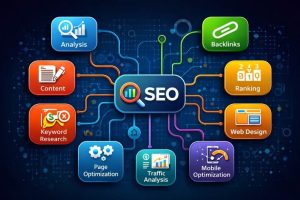
The question “what is SEO” is one of the most searched digital marketing queries worldwide.
SEO (Search Engine Optimization) is the process of improving a website’s visibility on search engines like Google, Bing, and Yahoo without paying for advertisements. It involves optimizing content, website structure, page speed, user experience, keywords, backlinks, and many other ranking factors.
The primary goal of SEO is to help search engines understand your content so they can show it to users searching for relevant information.
Benefits of SEO
- Increases organic website traffic
- Builds trust and credibility
- Improves user experience
- Generates quality leads
- Offers long-term marketing results
- Delivers a higher return on investment compared to many paid marketing strategies
How Search Engines Work
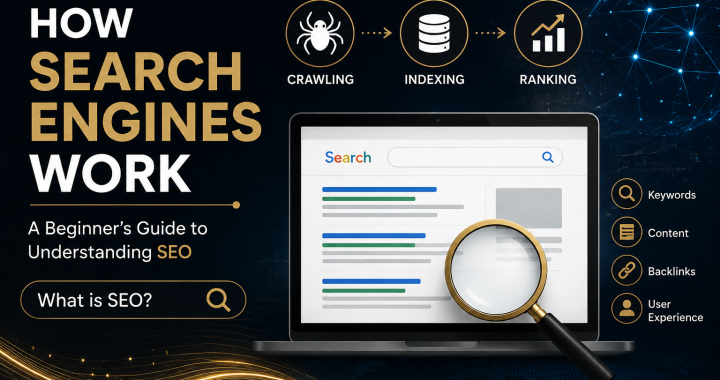
Search engines perform three major functions:
1. Crawling
Crawling is the first step in the search engine process.
Search engines use automated programs called web crawlers, bots, or spiders to discover new and updated web pages across the internet.
These bots move from one webpage to another by following links. Whenever they find new content, they analyze it and decide whether it should be added to the search engine’s database.
During crawling, search engines collect information such as:
- Website content
- Images
- Videos
- Internal links
- External links
- Meta tags
- Page structure
If your website cannot be crawled properly, it has little chance of appearing in search results.
2. Indexing
After crawling comes indexing.
Once a page has been crawled, the search engine stores it in a massive database called the index.
Think of Google’s index as a giant digital library containing billions of web pages.
During indexing, search engines analyze factors like:
- Page content
- Keywords
- Headings
- Images
- Alt text
- Internal linking
- Website structure
- Freshness of content
If your page provides valuable and unique information, it is more likely to be indexed successfully.
However, pages with duplicate, thin, or poor-quality content may not get indexed at all.
3. Ranking
Ranking is the final stage.
Whenever someone types a query into Google, the search engine scans its index and selects the most relevant pages to display.
This ranking happens in a fraction of a second.
Google uses hundreds of ranking factors to determine which pages deserve the top positions.
Some important ranking factors include:
- Relevant keywords
- High-quality content
- Page speed
- Mobile-friendliness
- User experience
- Backlinks
- Website security (HTTPS)
- Content freshness
- Search intent
- Domain authority
The better your website satisfies these factors, the higher it can rank.
Why Understanding Search Engines Matters
Knowing how search engines work helps you create content that both users and search engines can understand.
Instead of guessing what Google wants, you can build pages designed to meet its quality standards.
This means:
- Better rankings
- More visitors
- Higher conversions
- Increased brand visibility
How Google Understands Your Website
Google doesn’t “read” webpages the way humans do.
Instead, it analyzes various signals, including:
Page Title
The title tells Google what your page is about.
Headings
Proper use of H1, H2, and H3 headings helps organize your content.
Keywords
Naturally placing important phrases like what is SEO helps search engines understand the topic of your page.
Images
Optimized images with descriptive file names and alt text improve accessibility and SEO.
Internal Links
Internal links help search engines discover more pages on your website while guiding users to related content.
Backlinks
When reputable websites link to your content, search engines view your site as more trustworthy.
Factors That Influence Search Rankings
Although Google considers hundreds of ranking signals, some of the most important include:
Quality Content
Helpful, original, and informative content consistently performs better than copied or shallow articles.
User Experience
A fast, mobile-friendly, and easy-to-navigate website keeps visitors engaged.
Keyword Optimization
Using your target keyword naturally throughout the content helps search engines identify the topic. Avoid keyword stuffing, as it can negatively impact rankings.
Page Speed
Slow websites often experience higher bounce rates. Faster loading times improve both user experience and search visibility.
Mobile Optimization
With most searches now happening on mobile devices, responsive website design is essential.
Secure Website
HTTPS encryption builds trust with both users and search engines.
Common SEO Mistakes to Avoid
Many websites struggle to rank because of avoidable errors.
Some common mistakes include:
- Publishing duplicate content
- Ignoring keyword research
- Poor website navigation
- Missing meta titles and descriptions
- Slow loading speed
- Broken links
- Not optimizing images
- Forgetting mobile users
- Keyword stuffing
- Low-quality backlinks
Avoiding these issues can significantly improve your website’s performance.
Tips to Help Search Engines Crawl Your Website
To make your website easier for search engines to understand:
- Publish high-quality content regularly.
- Use descriptive page titles and headings.
- Create an XML sitemap.
- Optimize your website speed.
- Add internal links between related pages.
- Ensure your site is mobile-friendly.
- Use HTTPS security.
- Fix broken links promptly.
- Optimize images with alt text.
- Write content that satisfies user intent.
Why SEO Is Essential for Every Business
Whether you run a local business, an e-commerce store, or a digital marketing agency, SEO can help you reach customers actively searching for your products or services.
Unlike paid advertising, SEO continues to generate traffic over time, making it one of the most cost-effective digital marketing strategies.
Businesses that invest in SEO often experience:
- Increased website traffic
- More qualified leads
- Better brand awareness
- Higher conversion rates
- Long-term business growth
Conclusion
Understanding how search engines work is the foundation of every successful SEO strategy. Search engines crawl websites, index valuable content, and rank pages based on relevance, quality, and user experience.
If you’ve been asking what is SEO, the answer goes beyond simply using keywords. SEO is a comprehensive approach to making your website more valuable, accessible, and trustworthy for both users and search engines.
By focusing on quality content, technical optimization, and a great user experience, your website can achieve higher rankings, attract more organic visitors, and generate long-term business growth.
Start optimizing today, and let search engines work in your favor.
Frequently Asked Questions (FAQs)
1. What is SEO?
SEO (Search Engine Optimization) is the process of improving a website’s visibility in search engine results to attract more organic traffic.
2. How do search engines find websites?
Search engines use automated bots called crawlers or spiders to discover and analyze webpages across the internet.
3. What are the three stages of a search engine?
The three stages are:
- Crawling
- Indexing
- Ranking
4. Why is SEO important?
SEO helps businesses improve online visibility, attract qualified visitors, build credibility, and increase sales without relying solely on paid advertising.
5. How long does SEO take to show results?
SEO is a long-term strategy. Most websites begin seeing noticeable improvements within 3–6 months, depending on competition, website authority, and the quality of optimization.