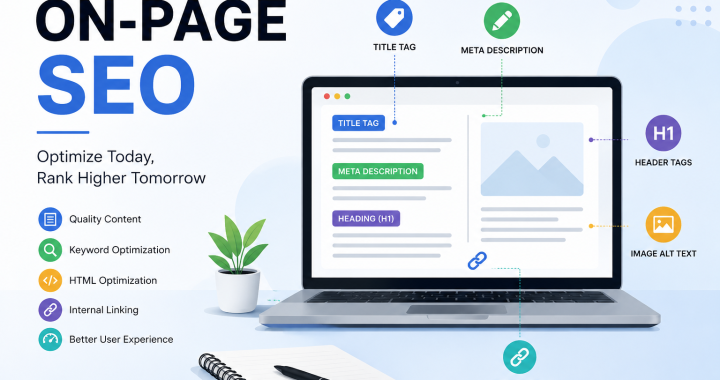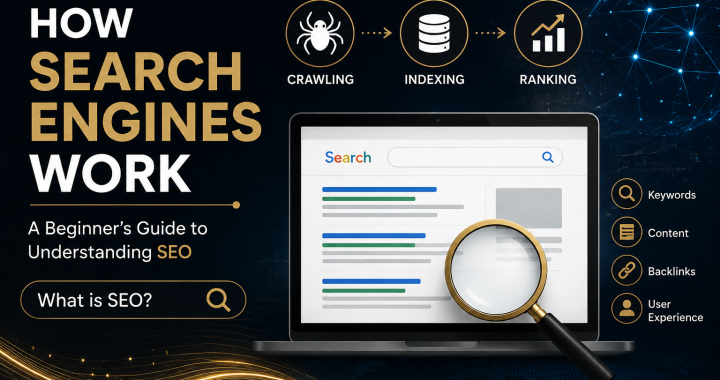
When people talk about SEO, they often focus only on website content, keywords, headings, and page speed. These are important parts of on-page SEO. But search engines also look at what happens beyond your website.
This is where off-page SEO becomes valuable. Off-page SEO includes actions taken outside your website to build trust, visibility, and authority online. The main goal is not to collect as many links as possible. Instead, it is to earn genuine recommendations, mentions, reviews, and connections from reliable sources.
A strong off-page SEO strategy helps search engines and potential customers see that your business is useful, trusted, and worth discovering.
What is off-page SEO?
Off-page SEO refers to activities that happen away from your website but can influence how visible your site becomes in search results. The best-known example is backlinks: links from other websites that lead to your pages.
Think of a backlink as a recommendation. If a respected website links to your guide, product, or service page, it can signal that your content may be useful. However, not every link has equal value. A relevant link from a trustworthy website is more meaningful than hundreds of links from unrelated or low-quality sites.
Off-page SEO may include:
Earning backlinks.
Building brand mentions.
Managing online reviews.
Creating local business listings.
Publishing guest articles.
Digital PR and media coverage.
Social media visibility.
Working with industry communities.
Google’s guidance emphasizes helpful, reliable, people-first content and encourages site owners to tell people about their content through relevant communities. At the same time, attempts to manipulate rankings through artificial link schemes can violate Google’s spam policies.
Why off-page SEO matters
Search engines aim to show useful and trustworthy results. They need signals to understand whether a website has a good reputation outside its own pages.
Off-page SEO can help your business:
Improve brand awareness.
Reach new audiences.
Earn referral traffic from other websites.
Build credibility in your industry.
Support local search visibility.
Increase the chance of natural backlinks.
Strengthen long-term search performance.
For example, imagine two local bakeries with similar websites. One bakery is mentioned in local news articles, has positive Google reviews, appears in local directories, and is tagged by customers on social media. The other has no online presence outside its own site. The first bakery has more evidence of real-world trust and visibility.
Build quality backlinks
Backlinks remain an important part of off-page SEO, but quality matters far more than quantity. A good backlink usually comes from a relevant, respected, and real website.
For example, if you run a fitness business, a link from a trusted health publication, local sports club, or wellness blogger may be useful. A random link from an unrelated website is much less valuable.
Here are practical ways to earn quality backlinks:
Create link-worthy content
Publish content that people want to share or reference. This may include detailed guides, original research, checklists, templates, local resource pages, tools, or case studies.
A financial adviser, for instance, could create a simple “Monthly Budget Planner for First-Time Earners.” A useful resource is more likely to be mentioned by bloggers, educators, or community pages.
Guest posting with value
Guest posting means writing an article for another website in your industry. The purpose should be to share helpful knowledge with a new audience, not to place links everywhere.
Choose relevant websites with real readers. Write original, well-researched content and include a natural link only where it genuinely helps readers.
Use digital PR
Digital PR means sharing newsworthy stories with journalists, bloggers, and publications. You could announce a new service, publish original data, support a local event, or share expert comments on an industry topic.
For example, a sustainable clothing brand might publish a report about consumer interest in eco-friendly fashion. A local journalist or blogger may mention the report and link to it.
Build business relationships
Partnerships can create genuine mentions. Work with suppliers, local organizations, charities, event organizers, industry groups, or complementary businesses. If the relationship is real and relevant, a mention on their website can bring both referral traffic and visibility.
Avoid buying backlinks, joining link farms, or using automated link-building software. Google classifies links created mainly to manipulate rankings as link spam, and violations can lead to lower rankings or removal from Search results.
Grow your brand mentions
A brand mention happens when another website, publication, or social media user talks about your business. It may or may not include a clickable link.
Brand mentions can help people discover your business and may lead to future backlinks. They also support your reputation because customers often research a company before making a purchase.
You can earn more mentions by:
Sharing useful expert advice.
Joining industry conversations.
Collaborating with creators or local businesses.
Sponsoring relevant community events.
Publishing reports, surveys, or guides.
Responding to journalist requests.
Offering exceptional customer experiences.
If someone mentions your business without linking to your website, you can politely contact them and ask whether they would consider adding a relevant link. Keep the request short, respectful, and focused on helping their readers.
Strengthen local SEO signals
Local off-page SEO is essential for businesses that serve a specific geographic area. Restaurants, salons, home-service providers, clinics, gyms, and shops should focus on accurate listings and customer reviews.
First, claim and optimize your Google Business Profile. Include your business name, address, phone number, website, working hours, service categories, photos, and updates.
Next, maintain consistent information across local directories, industry listings, maps, and social media pages. If your phone number or address differs across platforms, it may confuse customers and search engines.
Customer reviews are also powerful. Ask happy customers to leave genuine feedback, then respond professionally to every review. Thank people for positive reviews and address negative feedback calmly. Do not create fake reviews or offer rewards in exchange for positive ratings.
Use social media wisely
Social media links may not work like traditional backlinks, but social platforms can still improve reach and discovery. Strong social content helps people find, discuss, and share your business.
Focus on content that gives value:
Quick tips.
Before-and-after examples.
Customer stories.
Product demonstrations.
Behind-the-scenes videos.
Frequently asked questions.
Helpful industry updates.
For example, a home décor business can share room-makeover videos, colour-selection tips, and customer photos. If people find the content useful, they may share it with friends, bloggers, or community pages.
Choose one or two platforms where your customers are active. Posting consistently on the right channel is better than posting randomly on every platform.
Monitor your online reputation
Online reputation is a major part of authority. Customers often compare reviews, ratings, and public responses before choosing a service.
Search your business name regularly to see what people are saying. Monitor reviews on Google, social media, industry platforms, and local directories. Respond to complaints with patience and try to move sensitive discussions to private messages or email.
A negative review does not always damage a business. A respectful and helpful response can show potential customers that you care about solving problems.
You should also monitor backlinks. Tools such as Google Search Console can show some websites linking to your pages. Check for suspicious patterns, such as sudden large numbers of irrelevant links. Google generally understands that websites can receive unwanted spam links, so do not rush to use the disavow tool. Google’s guidance is to consider disavowing only when there are many artificial or low-quality links and a manual action exists or is likely.
Avoid risky off-page SEO tactics
Some shortcuts can damage your website’s long-term performance.
Avoid:
Buying links for better rankings.
Using private blog networks.
Posting automated comments with links.
Joining excessive link-exchange schemes.
Creating low-quality guest posts only for backlinks.
Adding keyword-heavy links in forum profiles.
Paying for fake reviews.
Submitting your site to hundreds of unrelated directories.
Paid or sponsored links should be clearly qualified. Google advises sites to mark affiliate links with rel=”sponsored”; it also supports rel=”nofollow” when appropriate.
A simple off-page SEO plan
Start small and stay consistent.
Create one useful resource on your website, such as a guide, checklist, or case study.
Update your Google Business Profile and local listings.
Ask real customers for honest reviews.
Build relationships with relevant local and industry websites.
Share your best content through social media and email.
Pitch one genuinely useful guest article or expert contribution each month.
Monitor brand mentions, backlinks, referral traffic, and reviews.
Improve the activities that bring real visitors, leads, or sales.
Off-page SEO is not a one-time task. It is a long-term process of building a reputation that people and search engines can trust.
Frequently Asked Questions
What is the difference between on-page and off-page SEO?
On-page SEO includes improvements made on your website, such as keywords, content, title tags, internal links, images, and page speed. Off-page SEO involves actions outside the website, including backlinks, reviews, brand mentions, local citations, and media coverage.
Are backlinks still important for SEO?
Yes, backlinks can still help search engines understand a website’s reputation and relevance. However, a few natural links from trusted and relevant websites are more valuable than many poor-quality links.
How can beginners build backlinks safely?
Create useful content, build genuine industry relationships, contribute helpful guest articles, list your business in relevant directories, and share expert knowledge with journalists or community sites. Do not buy links or use automated link-building services.
How long does off-page SEO take to work?
Off-page SEO usually takes time. Building trust, earning mentions, and gaining quality backlinks can take several weeks or months. Results depend on competition, content quality, industry, and how consistently you build relationships.
Do social media posts improve SEO rankings?
Social media activity can increase visibility, audience reach, and the likelihood that people discover and share your content. It should be viewed as a support channel rather than a shortcut to higher rankings.
Can bad backlinks hurt my website?
Spammy or artificial link patterns can create risk, especially if they are part of intentional link manipulation. Focus on earning natural links and monitor your profile. Use Google’s disavow process only with strong evidence of a serious spam problem or a related manual action.